
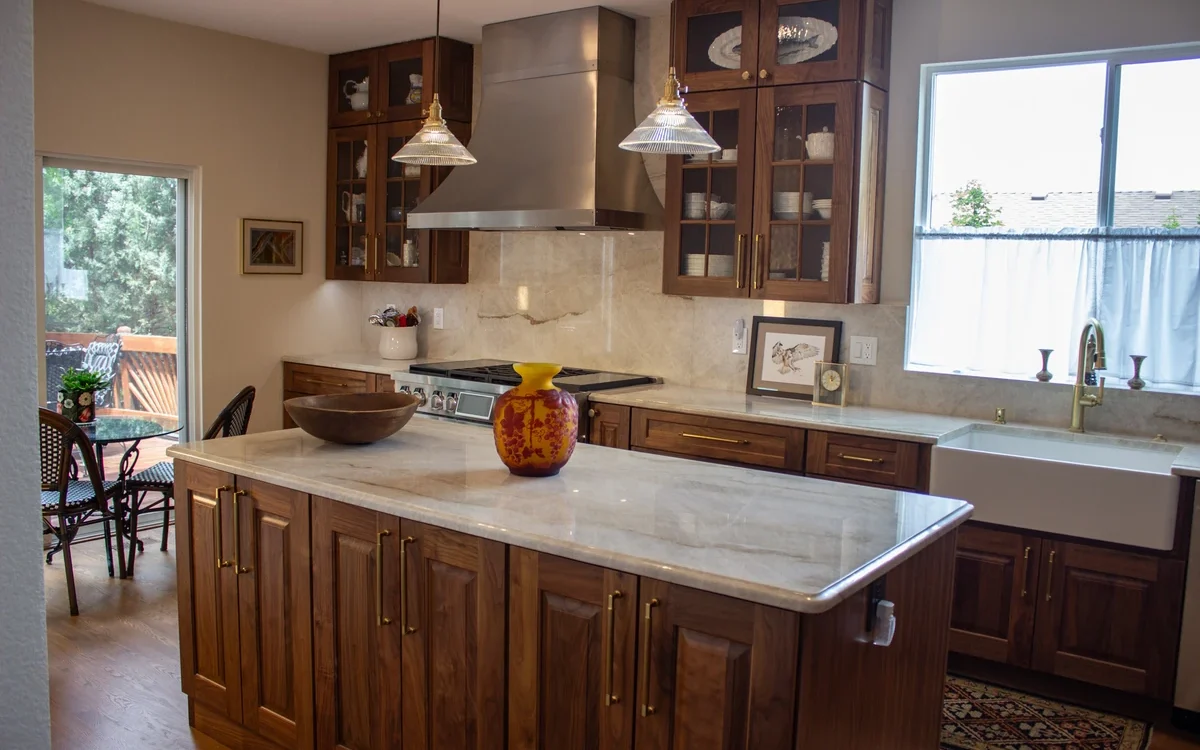
Leathered quartzite countertops appeal to homeowners who want natural stone with a textured surface and a softer sheen. Before you choose a slab, though, it helps to answer a more practical question: will you enjoy using and caring for that particular surface every day?
A good decision starts with the actual stone, a sample of the proposed finish, and clear care instructions. Here is how to compare your options, understand maintenance, and prepare for a countertop consultation in Denver.
What are leathered quartzite countertops?
Quartzite is natural stone. Leathered describes a surface finish created by brushing the stone to produce a tactile texture. It is not a leather coating. Stone producer Polycor explains how abrasive brushes create a leathered finish, producing subtle ridges and variations in the surface.
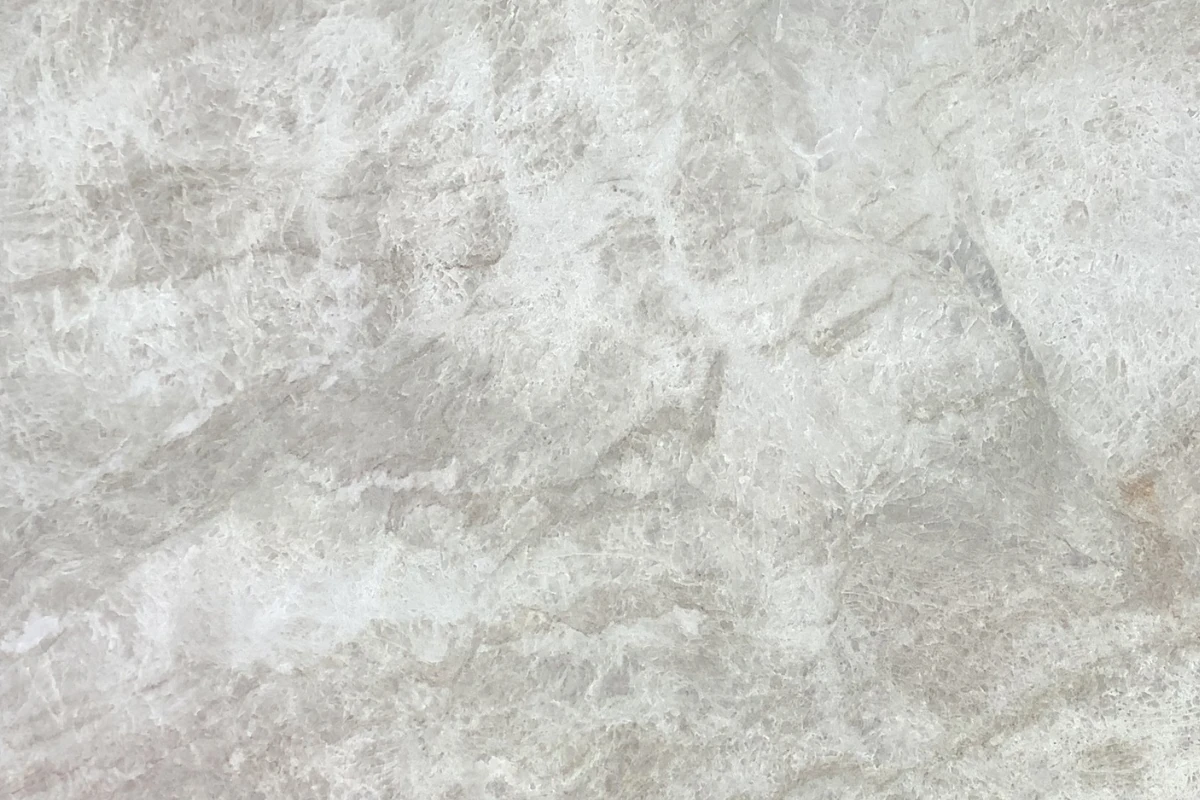
Quartzite also differs from engineered quartz. Natural quartzite forms from sandstone through geological heat and pressure. Engineered quartz is a manufactured surface made with mineral particles, resins, and other ingredients. The Natural Stone Institute’s quartzite and engineered quartz comparison explains why the similar names should not lead you to assume identical care requirements.
Leathered vs. honed vs. polished quartzite
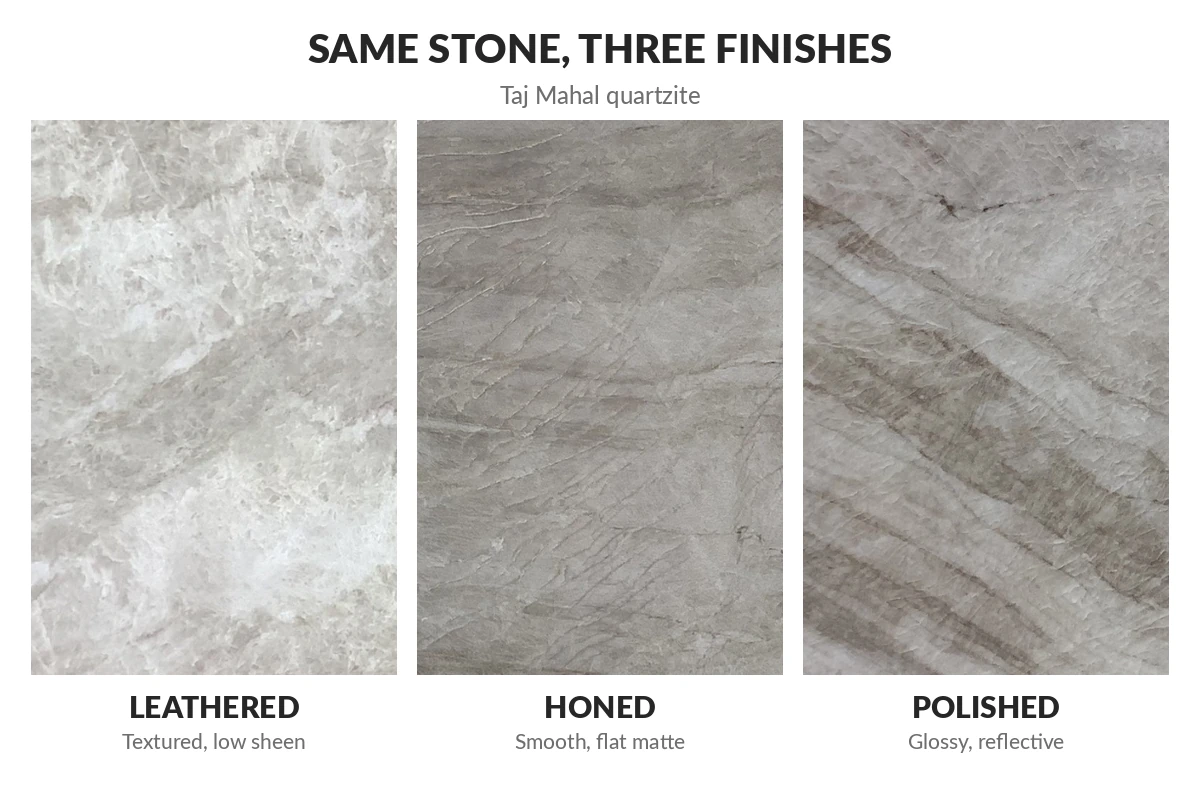
Compare finishes on the stone you are considering whenever possible. A photograph of a different quartzite can help you communicate a style preference, but it cannot approve the appearance or feel of your own countertop.
| Finish | Typical appearance and feel | What to evaluate in person |
|---|---|---|
| Leathered | Textured, with a softer sheen and variation in surface relief. | Run your hand across different areas. Decide whether you enjoy the texture where you prepare food and sit. |
| Honed | Smooth, with a matte appearance and less reflection. | Compare the color beside your cabinet finish and look at the sample from several angles. |
| Polished | Smooth and glossy, with stronger reflections. | View the sample under lighting similar to your kitchen, including light falling across the surface. |
The Natural Stone Institute’s guide to stone finishes notes that leathered texture varies among stones. Some surfaces have more pronounced relief than others. Ask to see the finish you will receive instead of relying on the word “leathered” alone.
How to clean leathered quartzite countertops
Start with the cleaning instructions for your stone and any treatment applied to it. For routine care, the Natural Stone Institute recommends neutral cleaners or mild dishwashing detergent and warm water, followed by rinsing and drying.
- Blot spills promptly. Avoid spreading a spill across a larger area.
- Use a soft cloth and an approved cleaner. Follow the product’s dilution instructions.
- Rinse away cleaner residue. Too much soap can leave a film.
- Dry with a soft cloth. Include the area around the sink and faucet.
Textured areas may need more attention to remove residue. Before buying, ask for a cleaning demonstration on a representative finished sample. Watch what it takes to wipe the surface clean, then decide whether that routine suits your household.
Avoid vinegar-based cleaning mixtures and abrasive scouring products. Use trivets and cutting boards as part of your normal kitchen routine. If a mark remains after gentle cleaning, ask your fabricator to help identify it before trying stronger products.
Does leathered quartzite need sealing?
The finish name alone does not answer that question. Quartzites vary in porosity, and sealing recommendations should reflect the actual stone. The Natural Stone Institute’s quartzite care guidance explains that some quartzites need sealing while others may not.
An appropriate impregnating sealer can improve stain resistance. It does not make a countertop stainproof. Ask your fabricator which product, if any, is recommended for your slab and finished surface.
Before installation, get three details in writing:
- Whether sealing is included and which product will be used.
- Any waiting period before the countertop can be used or cleaned.
- How to assess whether future resealing is needed.
There is no single resealing calendar that fits every quartzite countertop. Follow the guidance for your stone and sealer rather than automatically applying another coat each year. Report persistent darkening or changes around the sink so the cause can be assessed.
What to check before buying
Use your consultation to resolve these decisions before approving a slab or fabrication plan.
Confirm the material and finish
Ask for the stone’s identification and the proposed finish on the quote. Natural stone can be sold under confusing trade names, so request clarification if the description is vague. Discuss any treatments or filled areas and how they affect the care instructions.
Inspect the slab, not just a small sample
Review the full slab and point out the areas you particularly like. Ask which sections are proposed for the island, perimeter counters, and other pieces. Record your preferences before the layout is finalized. A favorite vein is only useful to your design if it appears where you want it.
Evaluate the texture where you will use it
Think beyond the first impression. Will you prepare meals here, help children with homework, or use the island as a desk? Try a representative sample with the everyday activities that matter to you. For writing, a desk mat may be a more comfortable choice on a textured surface.
Bring your cabinet finish into the comparison
Place a cabinet door sample beside the stone. Compare the pairing in daylight and under your planned interior lighting. Look at the overall combination from a few feet away as well as close up. Decide whether you want the cabinetry or the stone’s pattern to draw attention first.
Review edges, seams, and sink details
Ask to see the proposed edge profile and discuss how the exposed edges will be finished. Review seam locations and pattern direction on the layout. Have the fabricator explain the plan for the sink opening, faucet holes, and any overhang supports before fabrication begins.
Compare complete project quotes
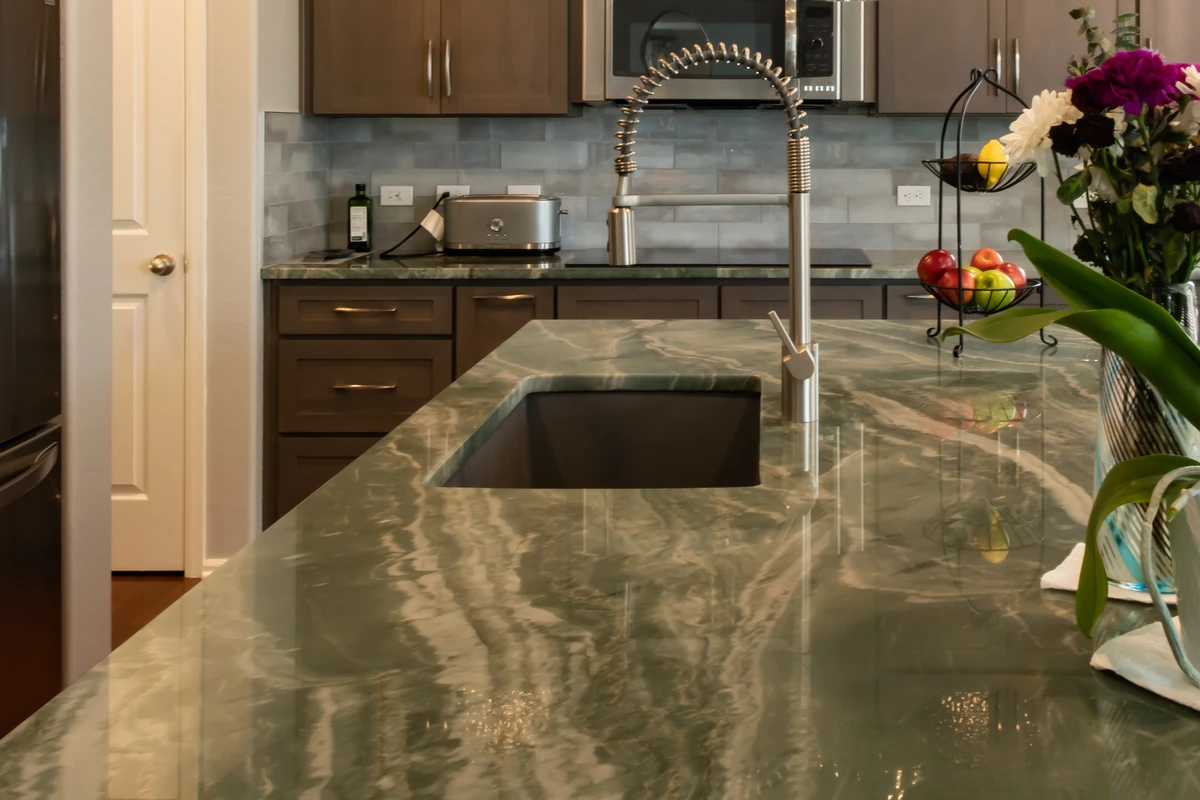
Request an itemized scope covering the stone, finish, fabrication, installation, and any removal work included. Identify the work other trades must handle and who will coordinate it. When comparing finishes, ask for prices based on the same layout and specifications so you can see what actually changes.
Common questions about leathered quartzite
Is leathered quartzite harder to clean than polished quartzite?
Texture can add places where residue needs attention. The depth of that texture and your cleaning routine matter. A demonstration on the finished stone is more useful than a blanket promise that every leathered surface is easy or difficult to clean.
Is leathered the same as honed?
No. Honed stone has a smooth, matte surface. Leathered stone has a textured surface. Both can appeal to someone seeking less gloss, but they feel different.
Can I choose a polished slab and have it leathered?
Ask the fabricator whether that change is suitable and available for the specific slab. Request a representative finish sample and a revised quote before committing. Do not assume the finished appearance will match a photograph of another stone.
Will coffee stain quartzite?
Coffee can stain natural stone. Blot spills promptly and follow the countertop’s care instructions. Sealing can improve stain resistance, but it does not remove the need for cleanup. If discoloration remains, ask your fabricator about an appropriate treatment for the stone.
Is quartzite more expensive than granite?
For a useful comparison, request quotes for the specific quartzite and granite you would actually choose, using the same project layout. Ask each quote to identify the finish, edge work, cutouts, and installation scope. A general material label is not a complete project price.
Plan your countertop selection with Elite
For a Denver-area project, bring your cabinet samples, room photos, approximate dimensions, and questions about daily use to your countertop consultation. Elite Cabinetry & Granite offers stone countertop selection, fabrication, and installation, including quartzite.
Contact Elite to arrange a showroom appointment and discuss the stone and finish options available for your project. The goal is to choose a countertop you enjoy looking at, touching, and living with.