

Table of Contents

It is 2:47 AM in Denver. The house is quiet. The dog is snoring somewhere near the hallway. The heater hums gently. You are half-asleep, moving on autopilot, guided only by a craving you could not quite justify in the daylight. Maybe it is a glass of cold water. Maybe it is leftover cheesecake that you swore you would save. Maybe it is just the comfort of opening the refrigerator and staring at what is inside for no real reason at all. And in this moment, you begin to notice how your kitchen layout design either supports this sleepy journey or works against it.
You do not turn on the overhead light, because you know it will turn the whole kitchen into a stage, bright and unforgiving. You reach forward, trying to remember where the cabinet handle is. You do not want to make noise. You do not want to break the spell of the quiet night. And then, without warning, you catch your pinky toe on the corner of the kitchen island. Pain, betrayal, dramatic whisper-swearing.
Most of us have lived this scene at some point. And it highlights something that often gets lost in the conversation about kitchen layout design: your kitchen has to function when you are not fully awake just as much as when you are cooking dinner for friends at 6 PM on a Saturday.
The truth is this: the way your kitchen is designed affects your behavior, your ease, your mood, and yes, even how likely you are to enjoy (or regret) that midnight snack.
This is where psychology meets design. A well-planned kitchen does not only look beautiful in photos. It understands how people actually live. It reacts to your routines, supports your habits, and makes the smallest daily moments easier instead of harder.
And sometimes, the most revealing moment of all is 2 AM.
Why We Even Wander Into the Kitchen at Night
Before we talk solutions, it helps to understand the impulse.
Late-night snacking is not always about hunger. Often, it is about:
- – Comfort
– Food can release dopamine, which makes us feel soothed and safe. - – Routine
– If you have done it before, your brain remembers. - – Quiet Moments
– The world is still, and the kitchen becomes a place that belongs only to you. - – Thirst or Temperature Regulation
– Sometimes your body just needs water.
Your kitchen environment can either support a gentle, calm, quiet experience or turn it into a loud, light-filled wake up that ruins the entire night’s sleep. The difference comes down to how thoughtfully the kitchen is laid out and built.
That is where kitchen layout design matters more than most people realize.
Lighting: The Make-or-Break Factor of the Midnight Snack
Let us start with the most dramatic culprit: light.
Lighting becomes even more important when you consider the rhythm of the home at night. Everything is quieter. Surfaces feel more pronounced. Your senses work harder to understand your surroundings. In this state, light does not just illuminate a room. It directs emotion and intent.
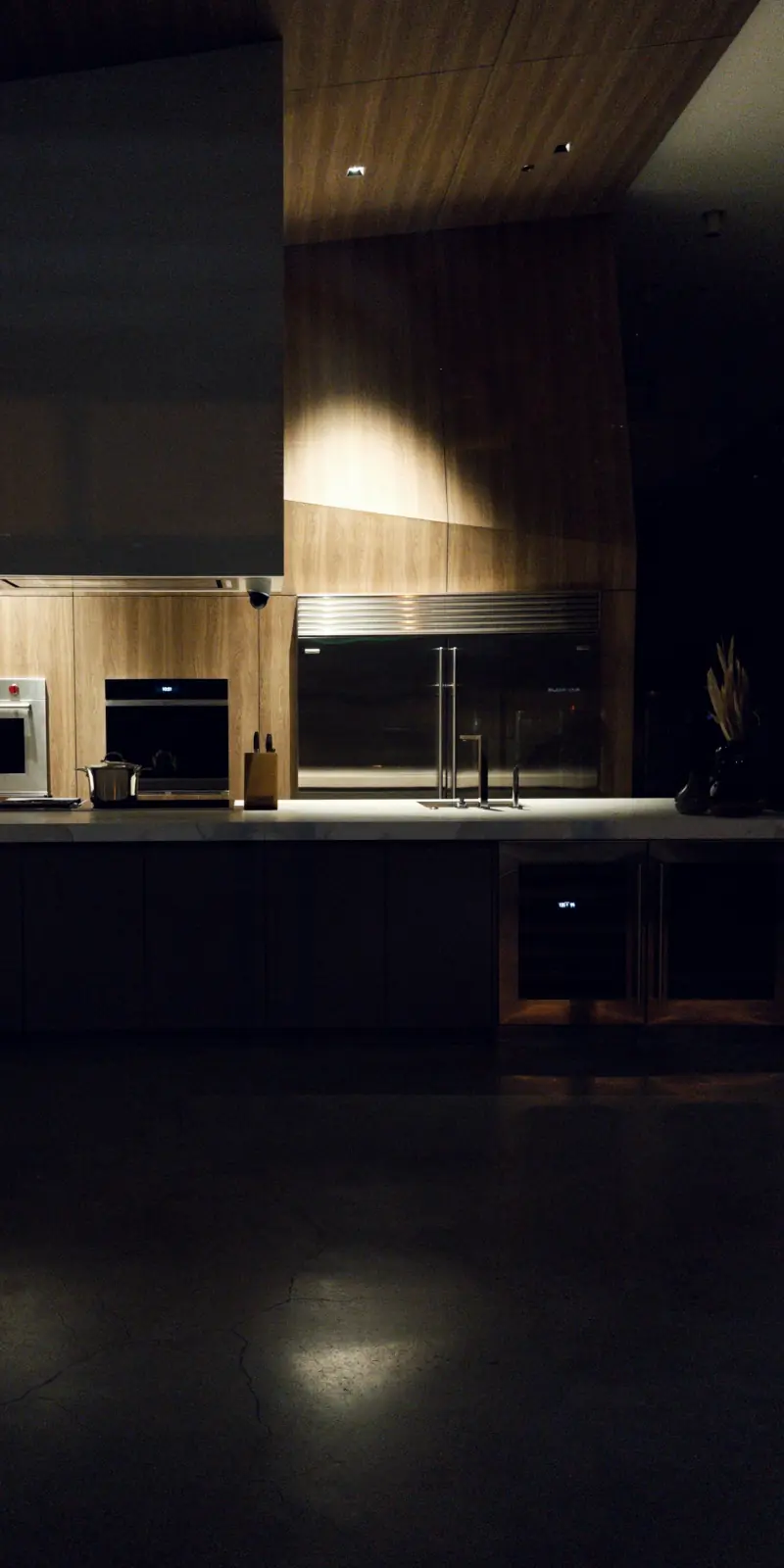
This is why many modern kitchens now use layered lighting instead of relying on a single bright fixture. Under-cabinet strips, toe-kick lighting, interior cabinet lights, and soft pendants over an island each serve their own purpose. At 2 AM, these smaller sources help create a path of visibility without overwhelming your eyes.
Color temperature also matters. Cool white LEDs feel clinical and alerting. Warm white lighting is calmer, closer to candlelight. It keeps the atmosphere relaxed and familiar. If you have ever walked into a convenience store at night and felt instantly awake, that is the effect of cold overhead lighting. Your kitchen should not feel like that.
Dimmer switches are another simple but powerful tool. They allow one kitchen to shift mood depending on the moment: full brightness during meal prep, medium for hosting, low for late-night movement. With dimmers, you are not choosing one lighting style. You are choosing flexibility.
Placement of light matters too. A common design mistake is placing all the strongest light directly behind the person standing at the counter or sink. This creates shadows and forces you to compensate with more brightness. Instead, light should fall in front of the workspace, guiding your eyes without effort.
Finally, consider how lighting interacts with surface materials. Matte countertops absorb light and reduce glare. Glossy finishes reflect more. A kitchen with thoughtful materials and balanced lighting will feel calm and intuitive in the middle of the night. The right lighting does not demand your attention. It quietly supports what you are doing, even when your brain is barely awake.
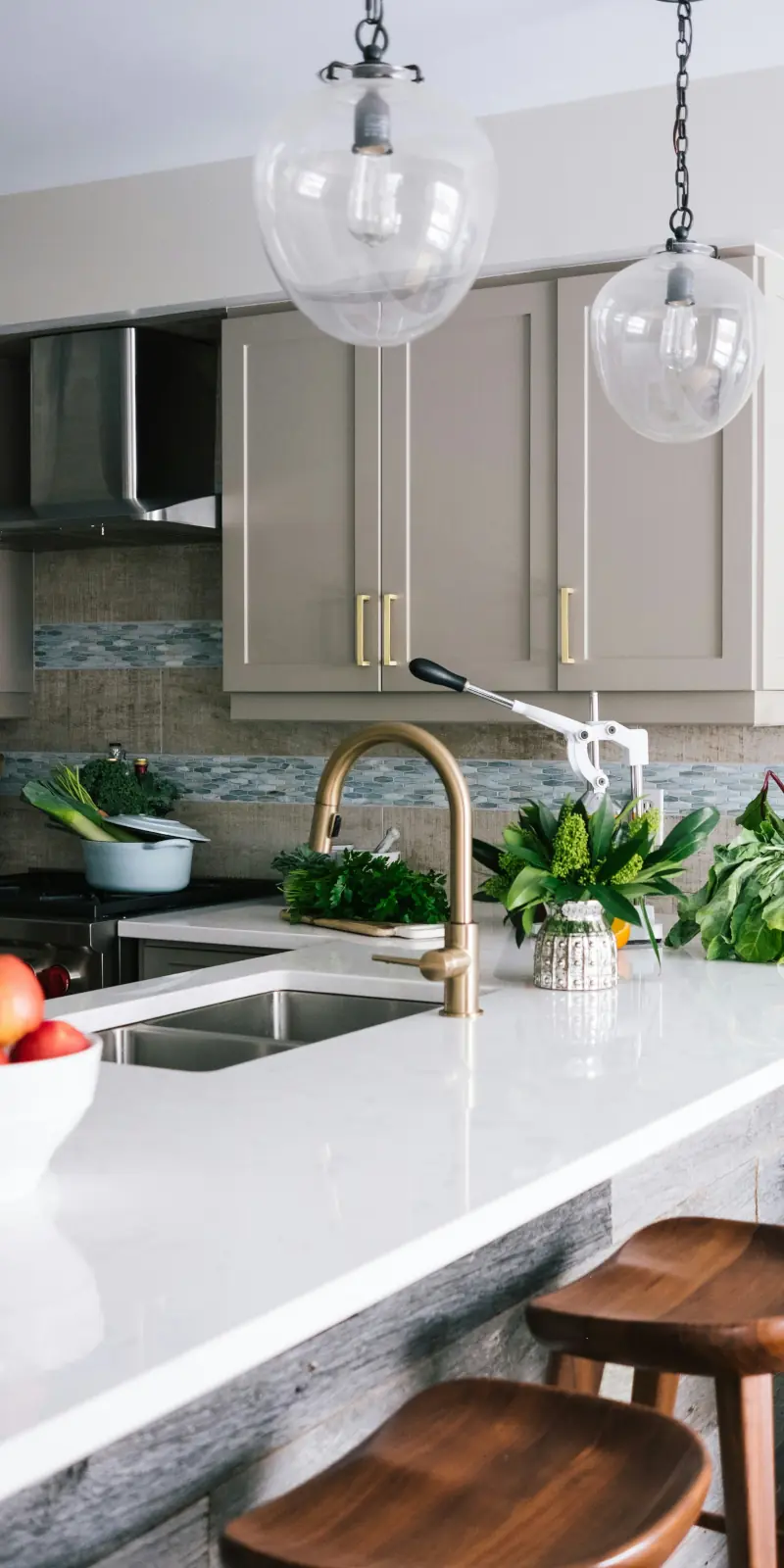
Ideal Lighting Solutions for Nighttime Kitchen Use
| Lighting Type | Why It Works at 2 AM | Notes |
|---|---|---|
| Under-cabinet LED Strips | They provide a gentle wash of light directly onto counters | Add dimmers or motion sensors for convenience |
| Toe-Kick Lighting (at cabinet base) | Guides your path without lighting the whole room | Great for homes with kids or pets |
| Indirect Ambient Lighting | Keeps light diffuse instead of sharp | Perfect for modern and transitional style kitchens |
| Smart Bulbs on Warm Setting | Can be set to low-level amber light | Supports circadian rhythm protection |
These lighting choices are subtle during the day but life-changing at night.
At Elite Cabinetry & Granite, we have seen homeowners in Denver be genuinely surprised at how much difference one small strip of under-cabinet lighting can make. It turns the late-night kitchen from a blinding stage into a calm, cozy pathway. Lets start started!
The Silent Kitchen: You Never Realize How Loud Cabinets Are Until 2 AM
During the day, a cabinet door closing sounds normal. At night, that same sound feels like slamming a car door in a cathedral.
This is where materials and hardware come into play.
What Helps Create a Quiet Kitchen at Night
- Soft-Close Hinges and Drawer Glides
Prevents accidental slamming. Truly a relationship-saver. - Cork or Luxury Vinyl Plank Flooring
These materials absorb sound better than porcelain tile or stone. - High-Quality Pantry Doors
Barn doors look beautiful in photos but can rattle loudly along their track. If you already have one, we recommend silent glide hardware replacements.
When planning kitchen layout design, noise management matters more than people think. Because life does not just happen from 8 AM to 9 PM. It happens whenever it happens.
The Midnight Triangle: A Real-Life Workflow Hack
Designers talk often about the “golden triangle” (fridge, stove, sink) for cooking efficiency. But at night, you are not cooking a meal. You are foraging like a polite and sleepy raccoon.
Your midnight triangle is likely:
Fridge → Snack Cabinet → Sink or Water Source
When these three areas are close and accessible, your nighttime excursion is short, smooth, and quiet.
A good Denver kitchen remodel considers:
- A snack or breakfast cabinet near the fridge
- Glassware stored within arm’s reach of the fridge
- A beverage station separate from the main cooking area
This makes the kitchen easier for all kinds of daily routines: morning coffee, after-school snacks, and yes, the late-night sneak-and-sip.

Tactile Navigation: Finding Everything by Feel
When you are half-asleep, your brain is not operating at full visual awareness. You rely more on touch than sight, and this is where a well-planned kitchen design becomes unexpectedly meaningful. Surfaces, textures, and materials can act like silent guides. This is where the idea that Kitchen Layout Actually Matters becomes more than a catchy phrase. It has real, input-level impact on the body when movement is slow and thought is quiet.
Thoughtful tactile cues can feel like small landmarks throughout the kitchen. Cabinet pulls that are shaped differently let you identify storage intuitively. You do not have to think. Your hand already knows. A lightly textured backsplash behind key zones helps orient your reach without turning on bright lights. The edge detail on countertops can signal where you are standing, especially if the island has a softer radius compared to the straight edges along the back wall. These details are quiet, helpful forms of direction.
Then there is the matter of appliance choice. An induction cooktop does not heat the surface itself, only the pan. This means if someone decides to warm a small snack while half asleep, the risk of placing a hand on a hot burner is dramatically reduced. This is not simply convenience. It is safety disguised as elegance. In a kitchen where Kitchen Layout Actually Matters, tactile navigation is part of the overall strategy, not an afterthought.
Temperature Matters Too
If you live in Denver, you know the specific sharpness of winter cold. And you know that feeling when your feet hit a freezing kitchen tile floor at 2 AM. It is immediate, and it snaps you awake whether you wanted to be awake or not. This is where flooring plays a larger role in nocturnal comfort than most homeowners consider.
Radiant floor heating is often talked about like a luxury feature, but at night, it becomes psychological comfort. Warm floors allow the body to remain relaxed. There is no shock, no jolt of cold. If a remodel is not planned, a long woven runner along the path from hallway to refrigerator does nearly the same job. The goal is simple: a soft, warm landing for bare feet. Comfort is not something that happens at the end of a project. It is design itself. Kitchen Layout Actually Matters because it shapes the physical experience of the home in large and small ways.
Snack Strategy: Yes, This Is a Real Thing
It might sound funny, but the idea of a “snack path” is real. The easier it is to access what you want, the less disruptive the midnight visit becomes. Packaging that crinkles loudly, containers stacked behind other containers, or endless digging through a cluttered fridge can pull you fully awake. A smart kitchen layout makes nighttime movement friction-less.
Some simple yet intentional elements include:
- Easy-open containers that require minimal grip strength
- Clear storage bins that show contents at a glance
- Low-noise or soft-close drawers
- Lazy Susans or pull-out pantry shelves that eliminate digging
- Snacks stored at mid-height rather than low cabinets or high shelves
This is not about encouraging midnight eating. It is about making sure the environment does not fight you when you are already tired. When the kitchen is well organized, midnight does not feel like a grocery store treasure hunt. It feels like your home taking care of you.
Safety Without Looking Like Safety
Safety in kitchen design often gets overlooked because people imagine visual compromises: bulky railings, rubber mats, or harsh warning labels. But in a truly well-designed space, safety looks invisible. It is structural. It is spatial. You feel it, even if you do not notice it consciously.
Rounded island corners prevent shin-level bruises. Continuous flooring between kitchen and living areas avoids subtle step-downs that are easy to trip over when disoriented. Knife storage that is deliberate and specific prevents half-awake hands from reaching where they should not. Lighting placement that prevents glare or reflection on glossy surfaces stops visual confusion before it begins.
The best part is that none of this changes how beautiful the kitchen looks at noon. Good design does not announce itself. It supports you.
Why This Matters More Than Aesthetics Alone
Social platforms reward dramatic kitchens. Tall cabinets, polished stone, sculptural fixtures, bold hardware, and accent lighting all have their place. They are enjoyable to look at. But true luxury is not about the picture. It is about how a space behaves in real life. The kitchen should function at your highest energy and your lowest. At your most focused and your most tired.
Your kitchen should work for you at your worst, not just impress guests at your best. A thoughtfully designed kitchen in Denver will feel calm on snowy nights, familiar in early mornings, and welcoming on those quiet, half-dream moments when you simply want a cold drink or something small to eat before returning to bed.
That is the difference between a kitchen that is just visually pleasing and a kitchen where the design genuinely supports daily living. That is where Kitchen Layout Actually Matters, quietly shaping the experience of home, one late-night step at a time.
And That Is Where We Come In
At Elite Cabinetry & Granite, we believe in designing kitchens for real life, real homes, and real people here in Denver. We take time to learn how you cook, snack, gather, clean, and move. We do not design for Pinterest boards. We design for you.
Your midnight snack story should be a peaceful one. No stubbed toes. No blinding lights. No clattering drawers.
A kitchen that fits your life at its quietest will fit your life at its fullest.
Thinking About a Remodel?
Let us help you create a kitchen that supports you around the clock.
Elite Cabinetry & Granite
Denver, Colorado
Custom Cabinets | Kitchen Remodeling | Bathroom Remodeling | Design Consulting
(303) 722-3700
Schedule a Design Appointment today at Book an Appointment
Because the best kitchens do not just look good.
They feel good to live in, even at 2 AM.