
Porcelain Countertops Denver Homeowners Are Falling For: The Low-Maintenance Trend for Indoor and Outdoor Kitchens
You want a surface that looks like natural stone, handles real life without constant babying, and still turns heads when guests gather around the island. If that sounds familiar, you are in good company. The search for beauty without upkeep has led a wave of remodelers to porcelain slab. The porcelain countertops Denver homeowners are asking about this year deliver exactly that combination. At Elite Cabinetry & Granite, we have watched porcelain grow from an occasional curiosity into one of the most requested materials in our showroom conversations.
The timing is no accident. Porcelain slab technology has matured dramatically over the past few years. Printed veining now looks convincing enough to fool a trained eye. Slab sizes have grown large enough to cover an entire island in a single seamless piece. Finishes have expanded far beyond glossy white. At the same time, Colorado’s love of indoor-outdoor living has homeowners hunting for surfaces that shrug off intense sun, sudden snow, and dramatic temperature swings without complaint. Porcelain checks every one of those boxes. This is why designers across the country and right here on the Front Range are specifying it more than ever.
In this guide, we will walk through what porcelain slab countertops actually are, where they excel, and where they ask for a little care. We will also discuss why they are unusually well suited to Colorado living and what you can expect to invest. By the end, you will have a clear sense of whether porcelain belongs on your remodel shortlist.
Why Porcelain Slabs Are Reshaping Denver Kitchen and Bathroom Design
Porcelain slabs are gaining attention because they combine design flexibility with the durability homeowners expect from a hard-surface countertop. They can reproduce the character of marble, quartzite, concrete, and wood while avoiding many of the maintenance concerns tied to natural stone. That does not mean porcelain is automatically the right choice for every project. Thickness, edge fabrication, installer experience, and the intended use of the space all matter.
A common myth porcelain surfaces face is that they are fragile simply because many slabs are thinner than granite or engineered quartz. Porcelain can chip along an exposed edge if it is fabricated or installed incorrectly, but the finished surface is highly resistant to heat, staining, ultraviolet exposure, and everyday wear. The quality of the installation matters just as much as the product itself, particularly around sink cutouts, cooktops, overhangs, and mitered waterfall edges.
Where Porcelain Slabs Perform Best
Porcelain works especially well in spaces where a continuous, low-maintenance surface is the priority. Large-format slabs reduce grout lines, create cleaner transitions, and allow designers to carry the same visual pattern across countertops, backsplashes, walls, and vertical features. That continuity can make a smaller kitchen or bathroom feel larger because the eye is not interrupted by frequent seams or changes in material.
Homeowners planning a larger kitchen layout should also consider how slab selection interacts with the evolution of the kitchen island. Modern islands often function as prep space, storage, seating, and a visual centerpiece, which makes material durability and edge design especially important.
Porcelain Versus Natural Stone
Porcelain and natural stone solve different design problems. Granite offers genuine mineral variation and depth that printed surfaces cannot perfectly duplicate. Suppliers such as granite world of Colorado natural stone providers remain valuable when the goal is a one-of-a-kind slab with authentic movement. Porcelain, however, provides more consistency and can replicate looks that might otherwise be expensive, porous, or difficult to maintain.
When comparing porcelain with selections available through suppliers of Colorado natural stone, consider maintenance expectations, edge profiles, repairability, outdoor exposure, and how closely adjoining slabs must match. Natural stone varies by nature, while porcelain offers greater control over color and pattern repetition.
Planning Porcelain Into the Entire Room
The best results come from selecting porcelain as part of the full design plan rather than treating it as an isolated countertop decision. Cabinet colors, flooring, lighting, plumbing fixtures, and storage requirements all affect how the slab will read in the completed space. Homeowners can review Elite Denver kitchen storage ideas before finalizing an island or perimeter layout, especially when appliances, waste pullouts, or deep drawers may influence countertop seams and support requirements.
Porcelain also performs well in coordinated bathroom designs. Matching vanity tops, shower walls, and accent surfaces can create a consistent finish while reducing grout maintenance. Explore the practical considerations behind bathroom remodeling in Denver before choosing slab dimensions, plumbing locations, or wall applications.
Installation Quality Determines the Final Result
Porcelain requires careful handling, accurate templating, specialized cutting equipment, and installers who understand thin-slab fabrication. Before ordering material, review the kitchen and bathroom remodeling process so design, fabrication, cabinetry, and installation occur in the correct sequence. With the right planning, porcelain can support stunning residential commercial construction projects while delivering a clean, durable, and highly customized finished space.
The Honest Pros and Cons of Porcelain
Every countertop material involves trade-offs, and you make the best decision when you can see the full picture. Here is how we frame it for clients who visit our showroom.
Where Porcelain Shines
- Stain resistance: Porcelain is nearly non-porous, so red wine, coffee, cooking oils, and pigmented sauces wipe away clean. It never needs sealing, not on day one and not in year twenty.
- Heat resistance: You can set a hot pan directly on porcelain without scorching or discoloration, something we never recommend doing on quartz.
- Scratch resistance: Porcelain measures around 7 on the Mohs hardness scale, on par with quartzite and harder than most granite, so everyday knives and cookware will not mark it.
- Effortless care: Warm water and mild soap. That is the entire maintenance routine.
- Lightweight versatility: Slabs come as thin as 12 millimeters, opening up applications like cladding an existing fireplace or facing cabinet fronts.
What to Watch For
Porcelain’s hardness comes paired with a degree of brittleness. A sharp blow to an unsupported edge, such as a cast iron skillet dropped squarely on a corner, can chip it. Edge profiles are also more limited than with granite or quartz because most patterns are printed on the slab face rather than running through the full body. However, through-body options improve every year. A balanced resource like Angi’s review of the pros and cons of porcelain countertops lands on the same conclusion we share with clients: the material is exceptional, provided it is fabricated and installed by people who truly know it.
That last point deserves real emphasis. Porcelain demands specialized blades, careful edge support, and experienced hands during cutting, transport, and installation. It is not a material for a crew learning as they go. When you compare the porcelain countertops Denver fabricators offer, ask pointed questions: How many porcelain projects has the team completed? How do they support the slab in transit? What does the workmanship warranty cover? The answers will separate specialists from generalists quickly.
Built for Colorado: Sun, Snow, and Indoor-Outdoor Living
Here is where porcelain moves from a smart choice to arguably the smartest choice for our region. Denver sits a mile above sea level. The thinner atmosphere means stronger ultraviolet radiation than most of the country experiences. Quartz surfaces depend on polymer resins that can yellow or fade in direct sunlight, which is why nearly every quartz warranty excludes outdoor use. Porcelain contains no resin at all. Its color is fired into the material at extreme temperatures, so it will not fade beside a south-facing window, under a skylight, or on an open patio.
Freeze-thaw stability matters just as much here. Front Range weather can swing from patio season to snowfall in a single afternoon, and porous materials suffer when absorbed moisture freezes and expands. Porcelain absorbs virtually no water, which is why sintered and porcelain products, such as ultra-compact surfaces like Dekton, carry outdoor ratings and long warranties even in punishing climates. If you have been dreaming about an outdoor kitchen that flows naturally from the indoor one, porcelain makes it possible to run the same surface, or a deliberately coordinated pair, from your interior island straight out to the grill station.
This is a real local advantage. The porcelain countertops Denver families install outdoors keep their color through July sun and January snow alike. The indoor sections never need sealing despite our bone-dry climate. We also see growing interest from commercial and government clients for exactly these reasons: high-traffic lobbies, break rooms, and public facilities benefit from a surface that stands up to heavy use without a maintenance schedule.
Cost, Value, and Design Pairings
Porcelain slab typically lands in the same price neighborhood as quartz and mid-range granite. Nationally, installed costs generally run from about $50 to $120 per square foot depending on the slab and project. HomeAdvisor’s guide to porcelain countertop installation costs places most projects between $1,500 and $3,800 all-in. A large kitchen with a waterfall island and full-height backsplash will invest more, while a bathroom vanity can come in surprisingly affordably.
What Drives Your Quote
- Slab thickness and format: Thicker 20 millimeter slabs and oversized formats cost more than 12 millimeter material.
- Edge details: Mitered and waterfall edges require more fabrication time than eased profiles.
- Cutouts and complexity: Sink, cooktop, and outlet cutouts each add fabrication work.
- Finish and pattern: Premium marble-look patterns with dramatic full-slab veining sit at the higher end of the range.
The long-term math favors porcelain. Because it never needs sealing and resists stains, scratches, heat, and UV, ongoing maintenance cost is essentially zero. A properly installed surface will look the way it did on day one for decades. You are buying longevity as much as looks, and that durability pays off again at resale, when buyers recognize a surface that will not need replacing.
Design-wise, porcelain aligns beautifully with where kitchens are heading. The surface trends shaping 2026 center on warm neutrals, soft veining, matte textures, and mixed-material spaces. We love pairing a marble-look porcelain island with warm walnut cabinetry or running honed concrete-look porcelain along the perimeter while a dramatic quartzite island takes center stage. Because porcelain comes in so many personalities, it can headline your design or quietly support it. If you are weighing natural stone against porcelain for your project, browsing our granite slabs and stone inventory is an easy way to compare looks before you ever visit.
See What’s In Stock: The Denver Slab Inventory
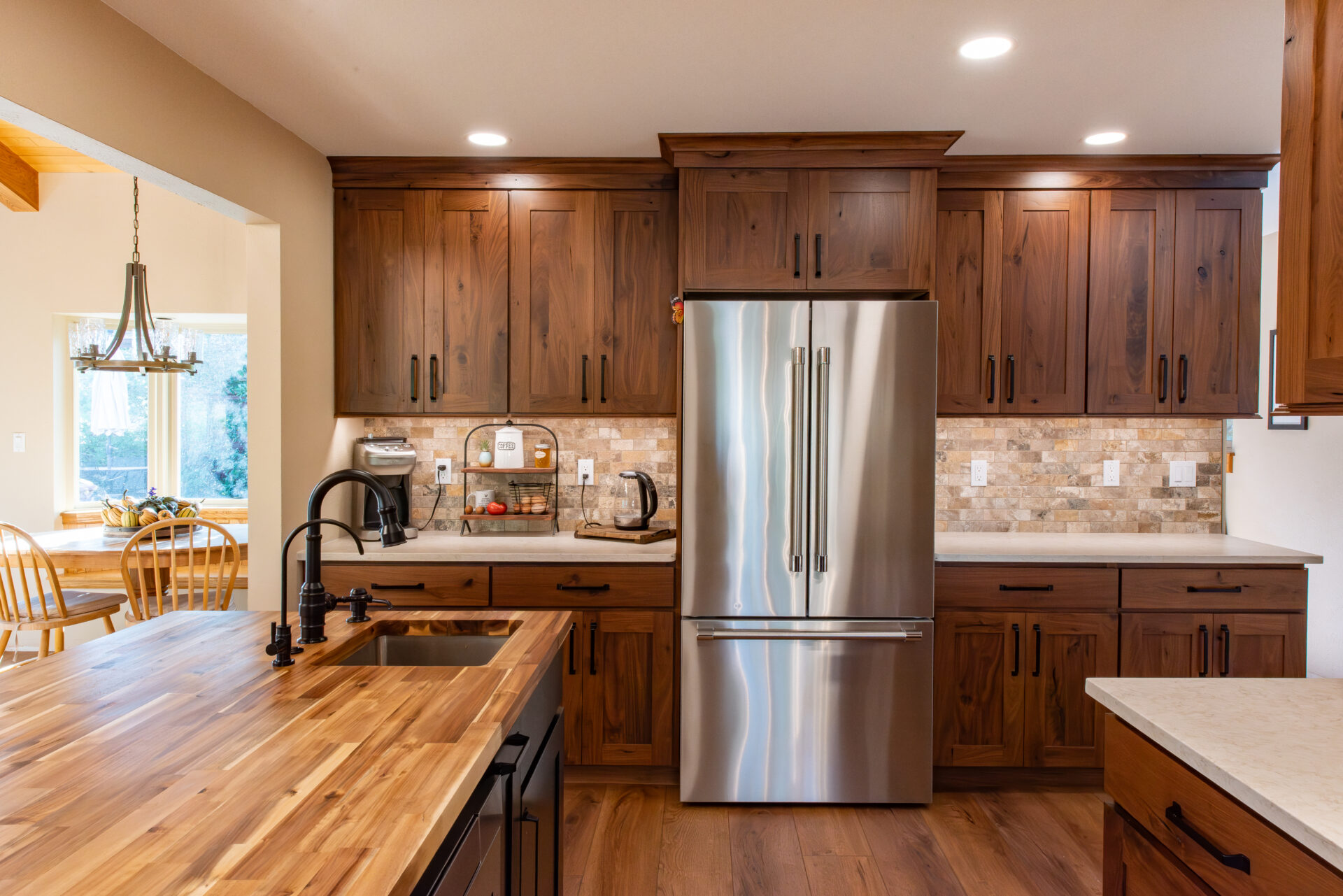
Before you commit to a material, it helps to stand in a showroom and compare options side by side, and that is exactly what our Denver Slab Inventory page is built for. Right now it lists dozens of full-size granite, quartzite, and marble slabs currently on our floor, each one photographed, measured, and priced individually, ranging from around $800 for smaller specialty pieces up to $4,500 for premium quartzite in larger formats. Every listing includes the slab’s dimensions and SKU number, so if something catches your eye, you can call or email us with that number and we will confirm it is still available before you make the trip in.
This matters more than it might seem when you weigh porcelain against natural stone. Photos on a screen flatten veining, depth, and finish in ways that make every material look similar. Walking the aisle and running your hand across a leathered quartzite next to a honed marble next to a polished granite gives you a much better feel for how each one will actually read in your kitchen. It makes the case for porcelain either stronger or weaker depending on what you are drawn to. Homeowners exploring porcelain countertops Denver options often start their visit by browsing the natural stone inventory first. This gives them a baseline for comparing veining, color depth, and finish before evaluating porcelain’s printed alternatives.
Because our stone inventory turns over as slabs sell and new ones arrive, the page reflects what is physically in the building today rather than a static catalog. If you already know porcelain is the direction you want to go, our showroom team can walk you through porcelain samples and finishes in person. They can also pull up comparable natural stone slabs from the current inventory so you can see the difference in real time. Either way, the goal is the same: for the porcelain countertops Denver homeowners are considering to be judged against real slabs in the room, not photos on a phone, before a single square foot gets ordered.
Is Porcelain Right for Your Remodel?
If your priorities are natural stone beauty, minimal upkeep, and a surface that thrives under Colorado sun and seasons, porcelain slab has earned a place on your shortlist. It rewards households that cook hard, entertain often, and would rather spend Saturdays in the mountains than resealing stone. The one caution worth repeating is installer experience: fabrication quality determines whether you enjoy this material’s strengths for decades. Choose your remodeling partner carefully.
The best way to decide is to stand in front of full slabs. Veining scale, matte texture, and edge details are hard to judge from a phone screen. Comparing porcelain side by side against quartzite, quartz, and granite makes the differences click instantly. Our Granite Slabs & Stone Inventory page shows what is in stock right now. You can shortlist favorites before you stop by. Among the porcelain countertops Denver showrooms have on display, you will find everything from bright Calacatta whites to moody charcoals. Seeing them in person is the fastest way to find yours.
At Elite Cabinetry & Granite, we have spent more than 20 years guiding Denver homeowners, designers, and commercial clients from first sketch to final reveal. We would love to help you explore whether porcelain is the right fit for your project. Stop by our showroom at 1340 S Santa Fe Dr, Denver to see slabs in person, or call 303-722-3700 to schedule a free design consultation. From Inspiration to Installation, our family-owned team will be with you at every step. Visit elitedenver.net whenever you are ready to begin.